
30 Dyne/cm Test Pen (DIN 53364 & ISO 8296) for Low Surface Energy Detection
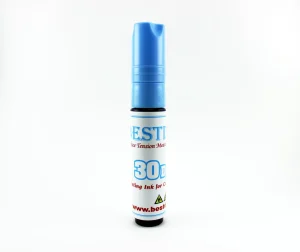
Designed for testing low surface energy plastics like polyethylene and untreated films.
The 30 Dyne/cm Test Pen from Best Dyne is specifically developed to identify very low surface energy materials before any surface treatment is applied. It is commonly used as an initial diagnostic tool to determine whether substrates such as polyethylene (PE) and polypropylene (PP) require further processing.
In many production environments, starting with a low dyne level like 30 allows operators to quickly detect untreated or contaminated surfaces.
Baseline Measurement for Untreated Plastics
The 30 dyne level is often used as a starting reference point in surface testing. It helps answer a critical question: Is the material ready for treatment, or still in its raw state?
-
- Indicates untreated or poorly treated surfaces
- Helps identify contamination or low wettability
- Supports pre-treatment decision making
Supports Pre-Treatment Process Optimization
Before applying corona or plasma treatment, manufacturers use the 30 dyne pen to verify the initial condition of the surface.
This allows:
-
- Better control of treatment intensity
- Reduced energy consumption
- More efficient production planning
Industries Focused on Raw Material Inspection
-
- Film extrusion and raw polymer production
- Packaging material suppliers
- Injection molded plastic components
- Surface preparation laboratories
Reliable Entry-Level Measurement Tool
The 30 dyne pen is not just a measurement tool—it is a process starting point for surface engineering workflows. With Best Dyne, users gain confidence in identifying low-energy surfaces and preparing them for further treatment.